Measuring the forest
- May 16, 2025
- 2 min. Reading time

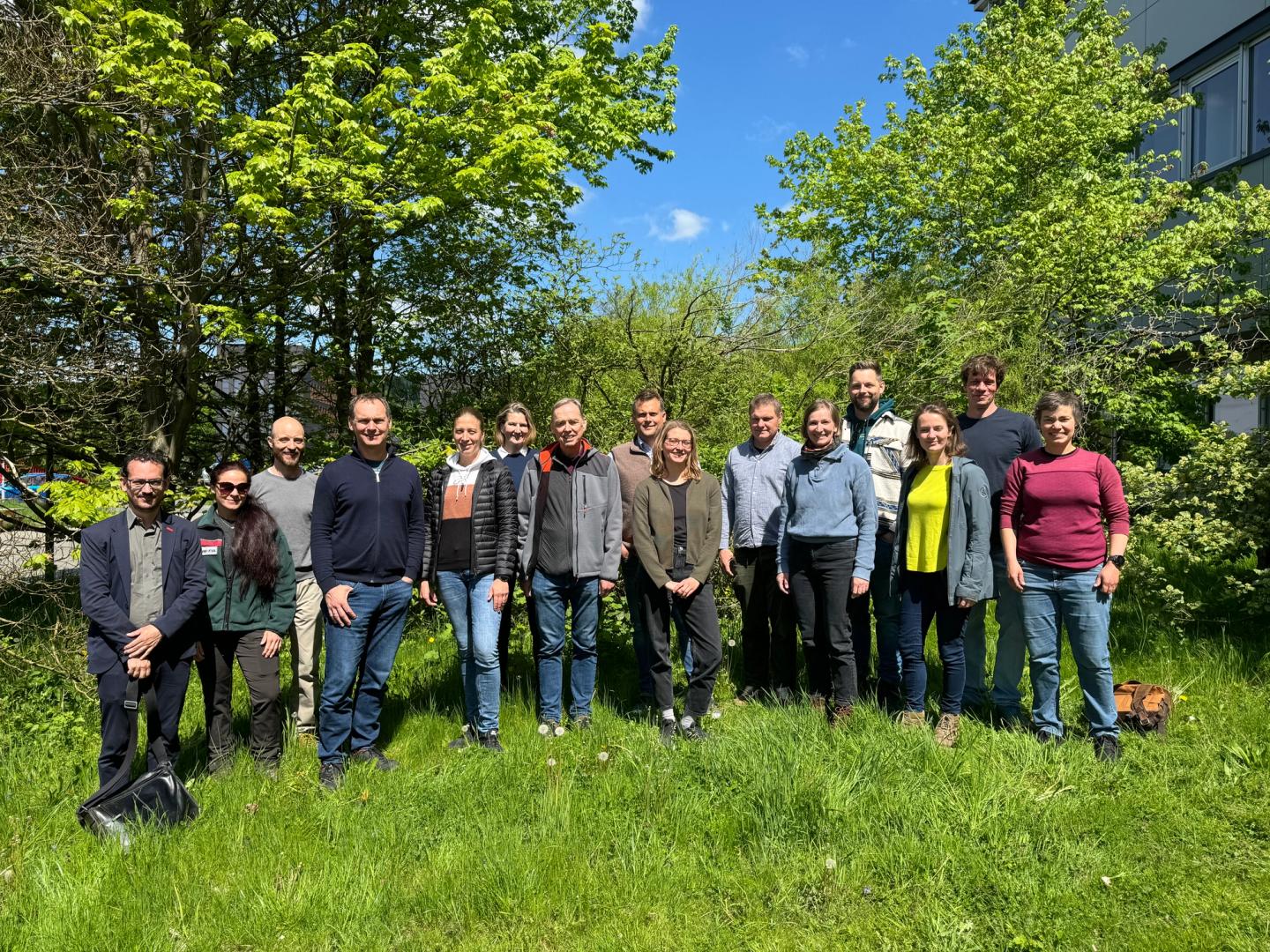
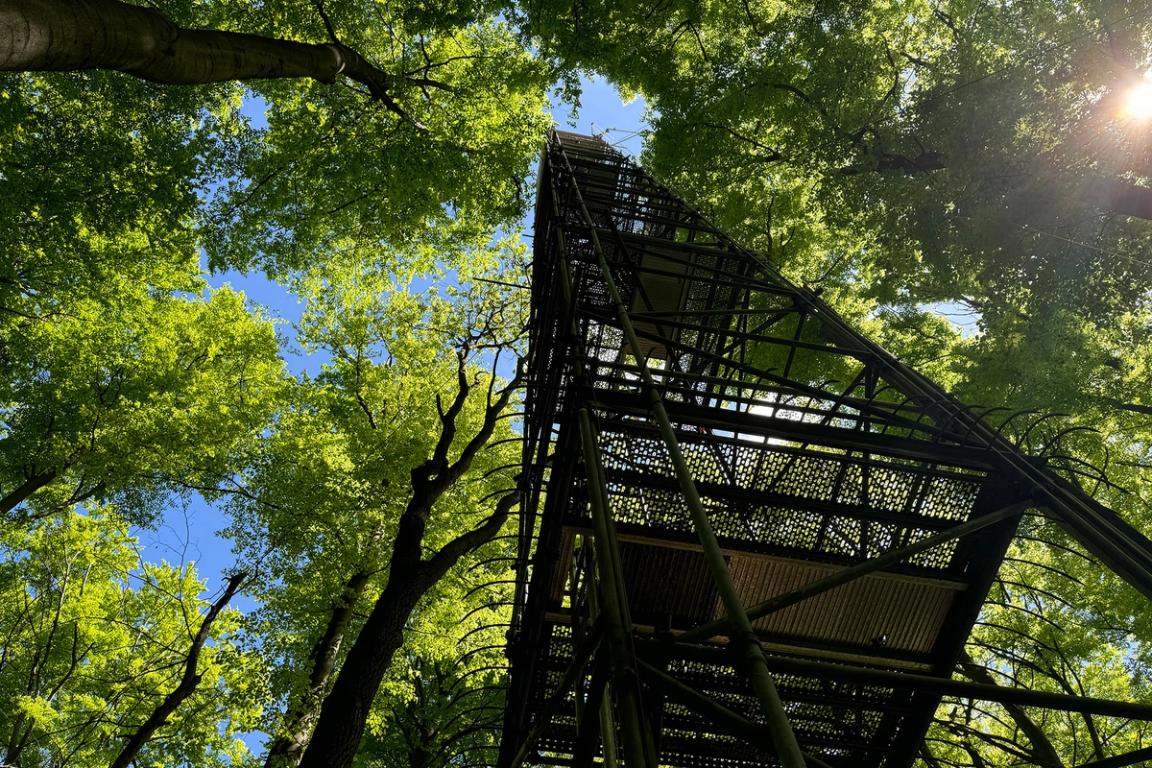
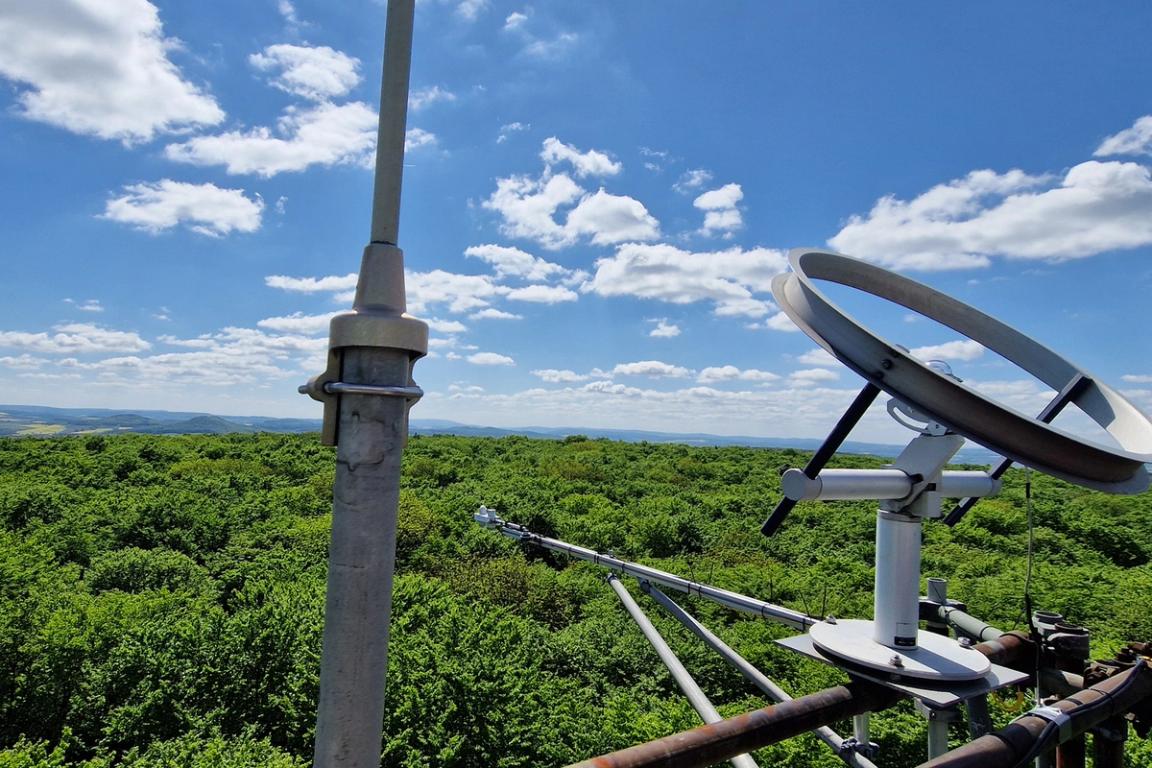
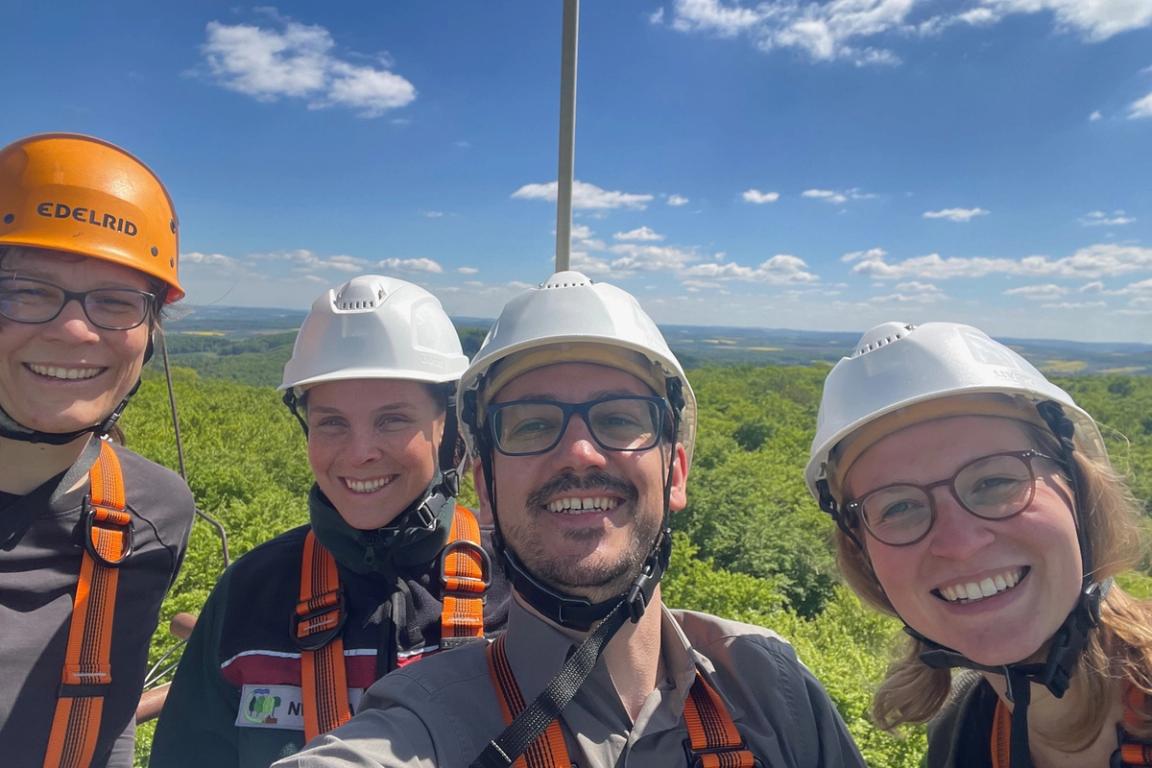
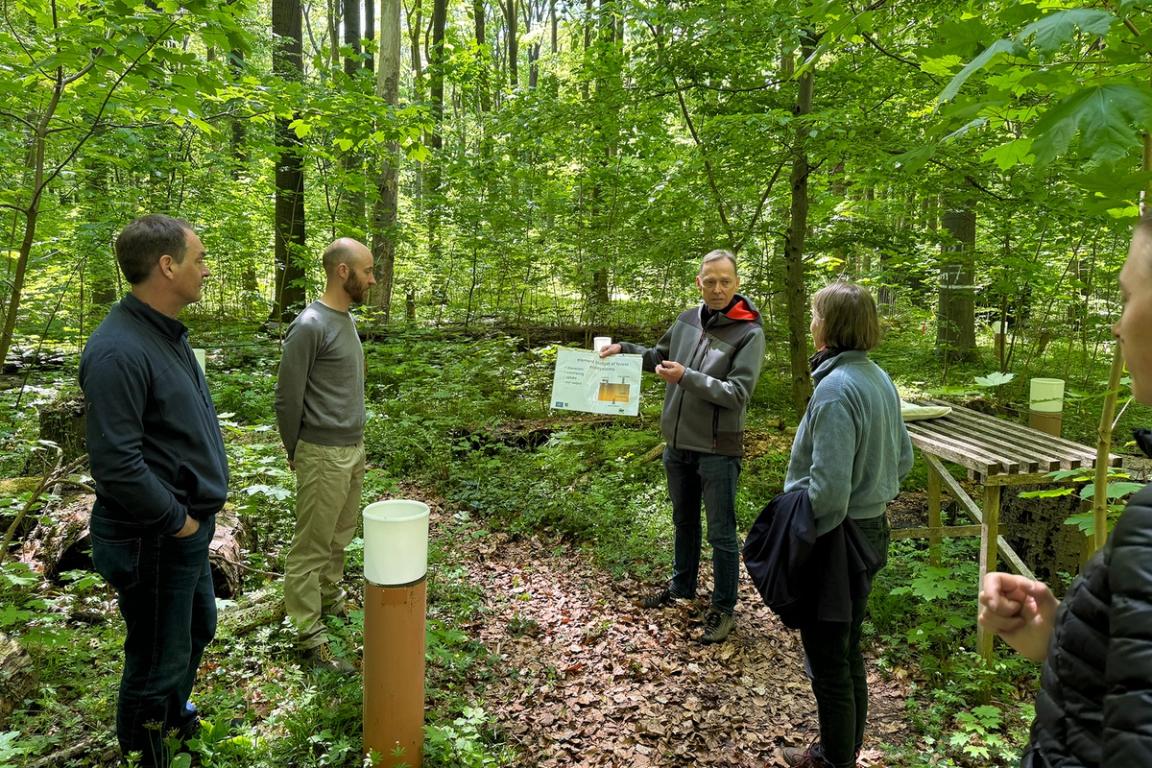
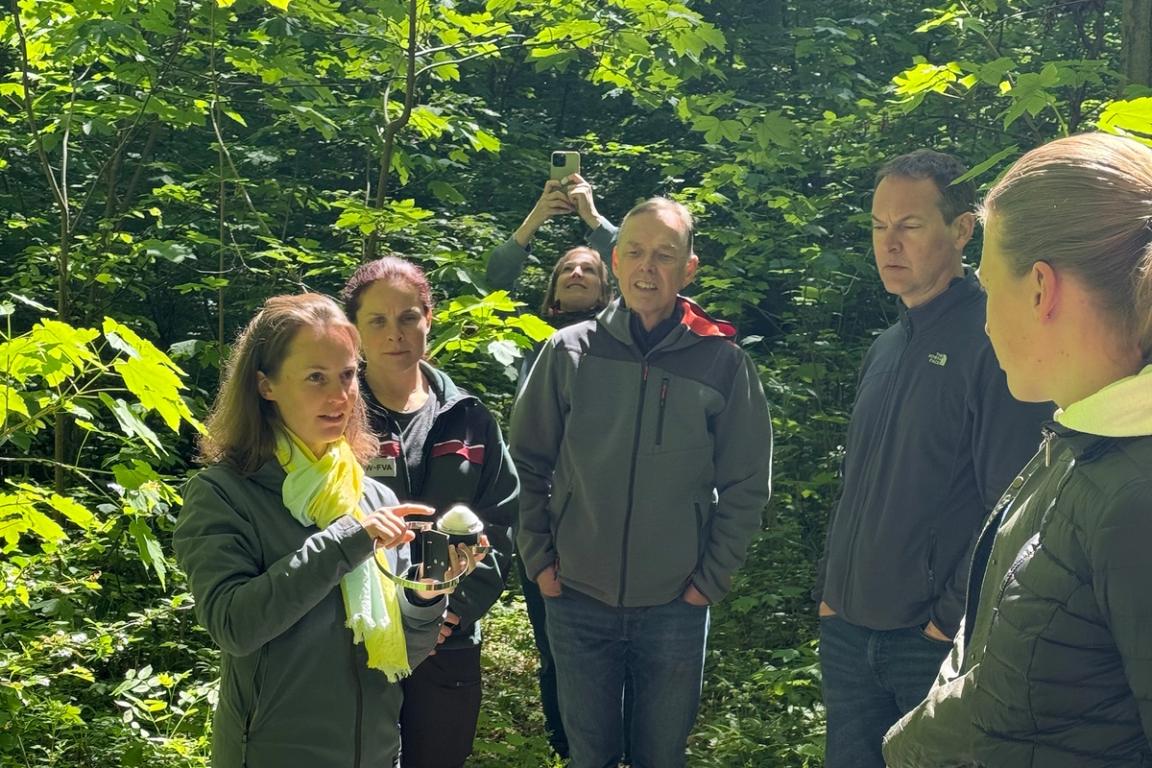
How do you measure the resilience of a forest? How does the structure of a forest affect its resilience? These are just two of the research questions being investigated by the FoResLab climate future lab. On 6 May, members of the Climate Future Labs Coordination Group learned how this research work is carried out in practice during a visit to FoResLab in Göttingen. The FoResLab team presented the research project and invited the participants to tour the measurement site in Göttingen's city forest. Here, participants were able to climb a 42-metre-high CO₂ measurement tower above the treetops and learn how data is collected using various sensors and measuring instruments.
FoResLab is investigating how forests can be made resilient to climate change under current and future conditions. To this end, the Klima.Zukunftslabor draws on measurement data from six different measurement sites. The FoResLab members presented one of these measurement sites in Göttingen's city forest to the Klima.Zukunftslabore coordination group. After a brief introduction to the research questions of the project, the excursion to the city forest began. At the measurement site, FoResLab scientists demonstrated the various measuring instruments that provide the data basis for the Klima.Zukunftslabor's research work. On the 42-metre-high CO₂ measurement tower, for example, the sensors that measure the gas composition emitted by the forest were presented. Additional data is collected on the ground. Dendrometers placed around the tree measure changes in tree circumference, for example. These changes provide information about how the tree is growing and how much water it stores. Rainwater is also collected in containers and later analysed for quantity and chemical composition. Differences in composition arise, for example, depending on whether the water has run down the tree or fallen directly into the measuring container. This and other data provide important insights into the condition and resilience of the forest in the face of climate change.
In addition to the coordinators of the Klima.Zukunftslabore, the responsible research officer from the Lower Saxony Ministry of Science and Culture was also a guest at the meeting. Regular face-to-face meetings are intended to strengthen cooperation and interdisciplinary exchange within the coordination group of the future laboratories. The members of the coordination group are the respective coordinators of the Klima.Zukunftslabore and the network management officer at the ZKfN office.





Contact person


More Posts
All
Climate Research Through Dialogue: “Climate Future Lower Saxony” Symposium 2026
First results are becoming visible – and with them, the question of how they can unfold their impact together with practice.
2 min. Reading time
Climate-Resilient Agricultural Landscapes in Lower Saxony
The sixth Climate Future Lab, AgRe-Lab, combines biodiversity and climate research with regional practice
2 min. Reading time

OpenPlanning Zine 03 "Somethings Cooking"
The zine shows how cooking together and co-creative urban design are sparking new ideas for a mobile climate garden in Braunschweig.
2 min. Reading time