
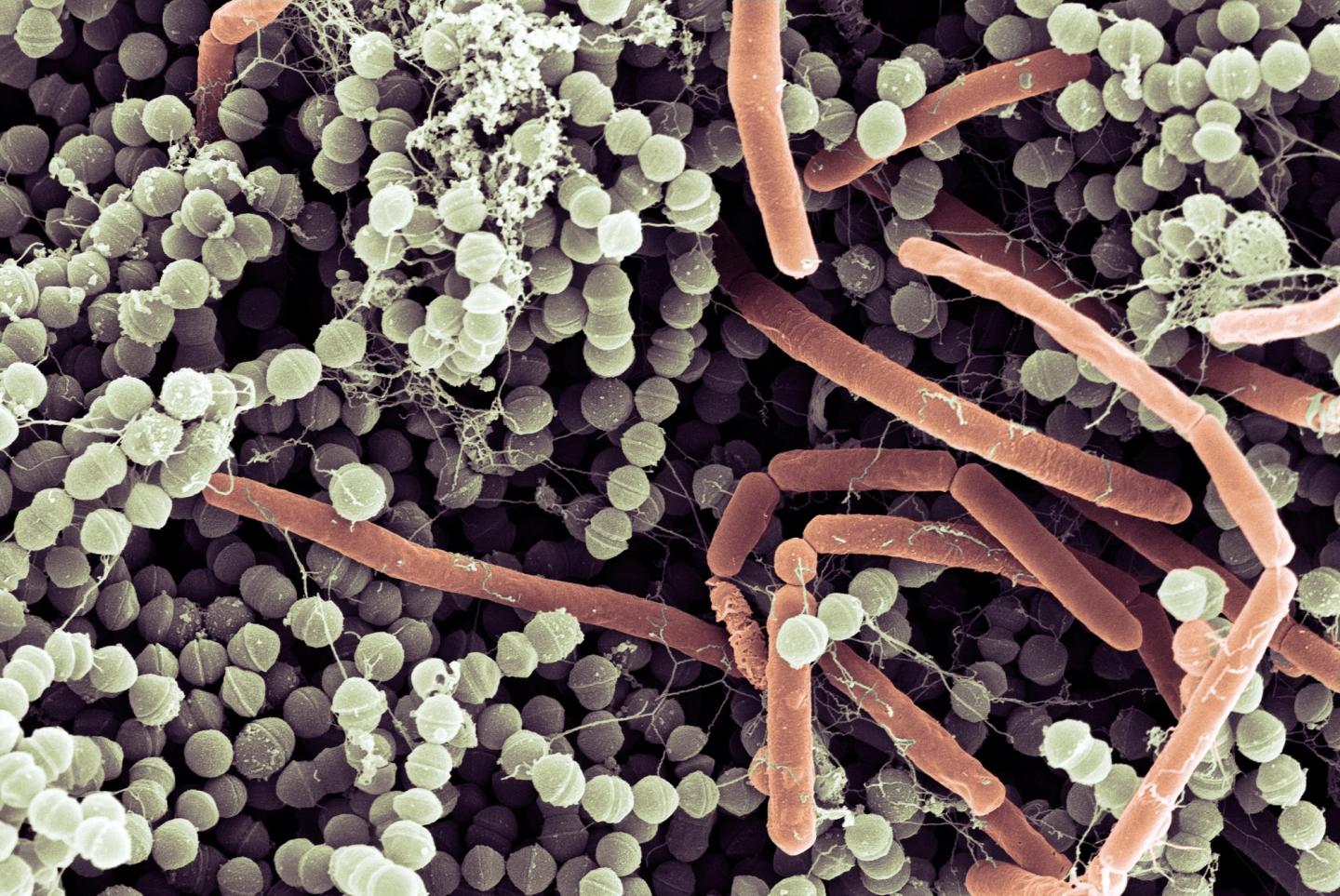
Climate change is altering ecosystems and affecting the health of humans, animals, and plants. Less attention has been paid so far to how these changes affect bacteria—even though they influence nearly every aspect of life. This is precisely where BaKlimON—Bacterial Climate Resilience in One Health—comes in. As the first associate partner, the research consortium will strengthen the network of the Lower Saxony Center for Climate Research in the future.
BaKlimON investigates how bacteria and bacterial communities respond to climate-related changes such as rising temperatures, drought, heavy rainfall, or flooding, and what consequences this has for the health of humans, animals, and plants. The focus is on both beneficial microorganisms—which are essential for functioning ecosystems and healthy plants—and pathogenic bacteria affecting humans and animals. Among other things, the researchers are investigating whether climate stress alters the virulence, host specificity, or antibiotic resistance of bacteria, and what consequences this may have for the environment and health.
What sets BaKlimON apart is its consistent One Health approach. Researchers from Leibniz University Hannover (LUH), Hannover Medical School (MHH), and the Hannover University of Veterinary Medicine Foundation (TiHo) are pooling their microbiological expertise across 13 subprojects. In doing so, the consortium is creating a platform for interdisciplinary collaboration, where questions are addressed jointly from various perspectives and the exchange of ideas across disciplinary and institutional boundaries is strengthened.
The project is receiving 3.2 million euros in funding over three years from the Lower Saxony Ministry of Science and Culture (MWK) and the Volkswagen Foundation as part of the “zukunft.niedersachsen” research funding program.
What does “associated partner” mean?
Associated partners are independent scientific projects or research consortia that contribute their expertise to the ZKfN network. They remain organizationally and financially independent but benefit from collaboration with the Climate Future Labs as well as from joint knowledge transfer and communication initiatives. In this way, the ZKfN strengthens scientific exchange beyond individual research consortia and creates space for new collaborations.
With BaKlimON as its first associated partner, the ZKfN gains additional interdisciplinary expertise. Research into the microbial impacts of climate change bridges environmental, animal, and human sciences and opens up new perspectives on challenges that have so far been studied only in specific subfields. At the same time, BaKlimON expands the ZKfN network to include a research area that is becoming increasingly important for understanding climate-related changes and developing mitigation and adaptation strategies.
More information about BaKlimON: https://zkfn.de/baklimon/
Project Spokesperson


More Posts
All
Climate Research Through Dialogue: “Climate Future Lower Saxony” Symposium 2026
First results are becoming visible – and with them, the question of how they can unfold their impact together with practice.
2 min. Reading time
Climate-Resilient Agricultural Landscapes in Lower Saxony
The sixth Climate Future Lab, AgRe-Lab, combines biodiversity and climate research with regional practice
2 min. Reading time

OpenPlanning Zine 03 "Somethings Cooking"
The zine shows how cooking together and co-creative urban design are sparking new ideas for a mobile climate garden in Braunschweig.
2 min. Reading time