
Buildings account for about 37 percent of global CO₂ emissions. At the same time, architecture today must find solutions for a future marked by uncertain climate conditions, changing usage requirements, and increasingly scarce resources. So how can buildings be designed to remain usable, adaptable, and resource-efficient in the long term?
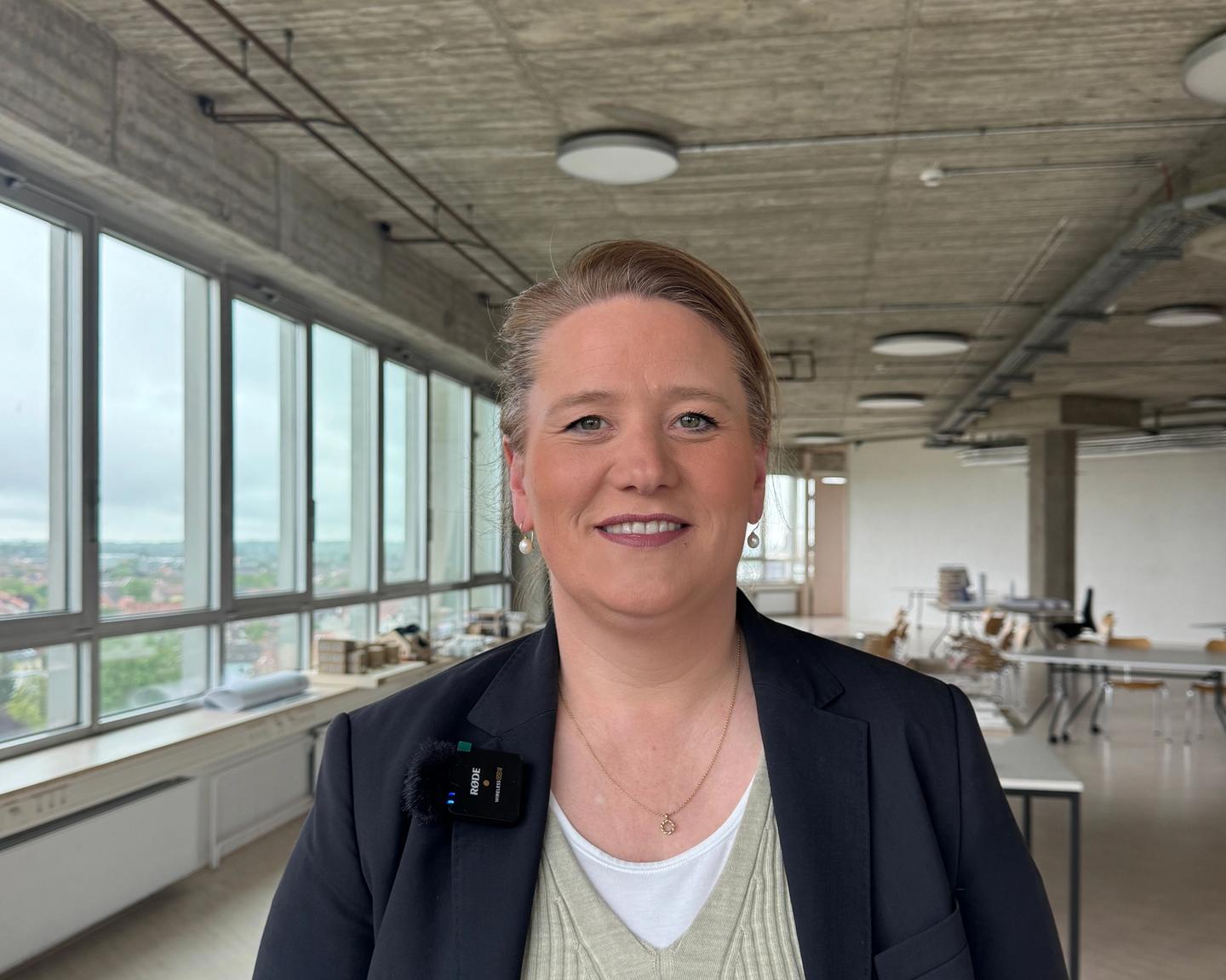
We discuss this with Elisabeth Endres, professor of building technology at the Technical University of Braunschweig. At the OpenCultures Climate and Future Lab, she works with interdisciplinary partners on so-called “elastic spaces”—that is, spaces that are not limited to a single use but can respond flexibly to social and climatic changes.
What role does the building sector play in the climate crisis?
The building sector plays a major role in the climate crisis—especially when it comes to existing buildings. Many emissions are already locked into these structures, which is why the following questions are important: What can existing buildings achieve in the future, and how can we continue to use them?
At the same time, the building sector accounts for more than half of the world’s waste. In addition, over 90 percent of non-renewable mineral resources are used in the construction industry. That is why we need to rethink how we handle both existing buildings and new construction.
You talk about “flexible spaces.” What does that mean?
The term “flexible spaces” has become a standard term here at the institute. It describes spaces that aren’t tailored to just a single use. So we no longer design spaces exclusively for a very specific purpose, but rather spaces that allow for different uses.
For example, an elastic space works for both larger and smaller groups. It may not be perfectly optimized for a single situation, but it’s flexible enough to meet many different needs. This isn’t just about individual buildings, but also about how spaces can be used in urban society in the future.
What does this mean, specifically, for architects designing today?
First and foremost, the question always arises: Are we working with existing buildings or new construction?
When working with existing buildings, we should focus less on what a space supposedly cannot do and instead ask: What uses are already possible? Rather than tailoring architecture entirely to a single use, the goal is to recognize and further develop existing qualities.
In new construction, on the other hand, we can design spaces from the outset to remain flexible for long-term use—for example, through ceiling heights, natural light, or ventilation. This results in buildings that can adapt to future requirements as well.
Can you give an example of an elastic space?
We’re actually standing in an elastic space right now—here at the institute. This floor was originally designed quite differently: with individual offices, larger open-plan offices, and a dark central area with a ventilation system.
Today, it has been transformed into a flexible structure that can be used in various ways. There’s cross-ventilation, different temperature zones, varying room depths, and good natural light. It is precisely these characteristics that make the spaces suitable for a wide range of needs.
Why is now the right time to think about flexible spaces?
Today, we need to give more thought to how buildings can be used for as long as possible. Sustainability doesn’t just mean being as energy-efficient as possible over the next ten or fifteen years. It’s also about keeping the materials used in construction in the cycle of use for as long as possible.
That’s why repurposing existing buildings is becoming increasingly important—for example, office buildings that could also be used for residential purposes in the future. Another topic currently being explored at our institute is the repurposing of church spaces. This naturally raises a societal question: How much church does our society still need in the future—and what new uses can be developed for these spaces?
What role does the OpenCultures Climate Future Lab play in this context?
At OpenCultures, we take an interdisciplinary approach to the concept of “elastic spaces”—in collaboration with experts in construction, structural engineering, and social research. This involves not only technical questions but also social acceptance: How will we deal with changing spaces in the future? What does it mean if spaces are perhaps a little warmer or colder, or need to be ventilated more? And how open is our society to such changes?
It is precisely this combination of architecture, technology, and social perspectives that makes the topic so exciting for us.
Thank you very much for the interview, Ms. Endres!
About Elisabeth Endres
Elisabeth Endres is a professor of building technology at the Technical University of Braunschweig, where she heads the Institute for Building Climate and Energy in Architecture. In both research and practice, she works at the intersection of architecture, building climate, and technical systems. Her work focuses on robust, durable, and resource-efficient buildings with as little technical complexity as possible. In addition to her academic work, she serves on the executive board of the engineering firm Hausladen and is involved in research and practice related to sustainable and climate-adapted building strategies. Elisabeth Endres is also a member of the newly appointed Climate Council of the Lower Saxony state government, which advises the state government on the implementation of its climate goals in a scientifically sound, practical, and socially balanced manner.
More Posts
All
Climate Research Through Dialogue: “Climate Future Lower Saxony” Symposium 2026
First results are becoming visible – and with them, the question of how they can unfold their impact together with practice.
2 min. Reading time
Climate-Resilient Agricultural Landscapes in Lower Saxony
The sixth Climate Future Lab, AgRe-Lab, combines biodiversity and climate research with regional practice
2 min. Reading time

OpenPlanning Zine 03 "Somethings Cooking"
The zine shows how cooking together and co-creative urban design are sparking new ideas for a mobile climate garden in Braunschweig.
2 min. Reading time