Coordinating Group meets in Göttingen
- July 13, 2026
- 4 min. Reading time

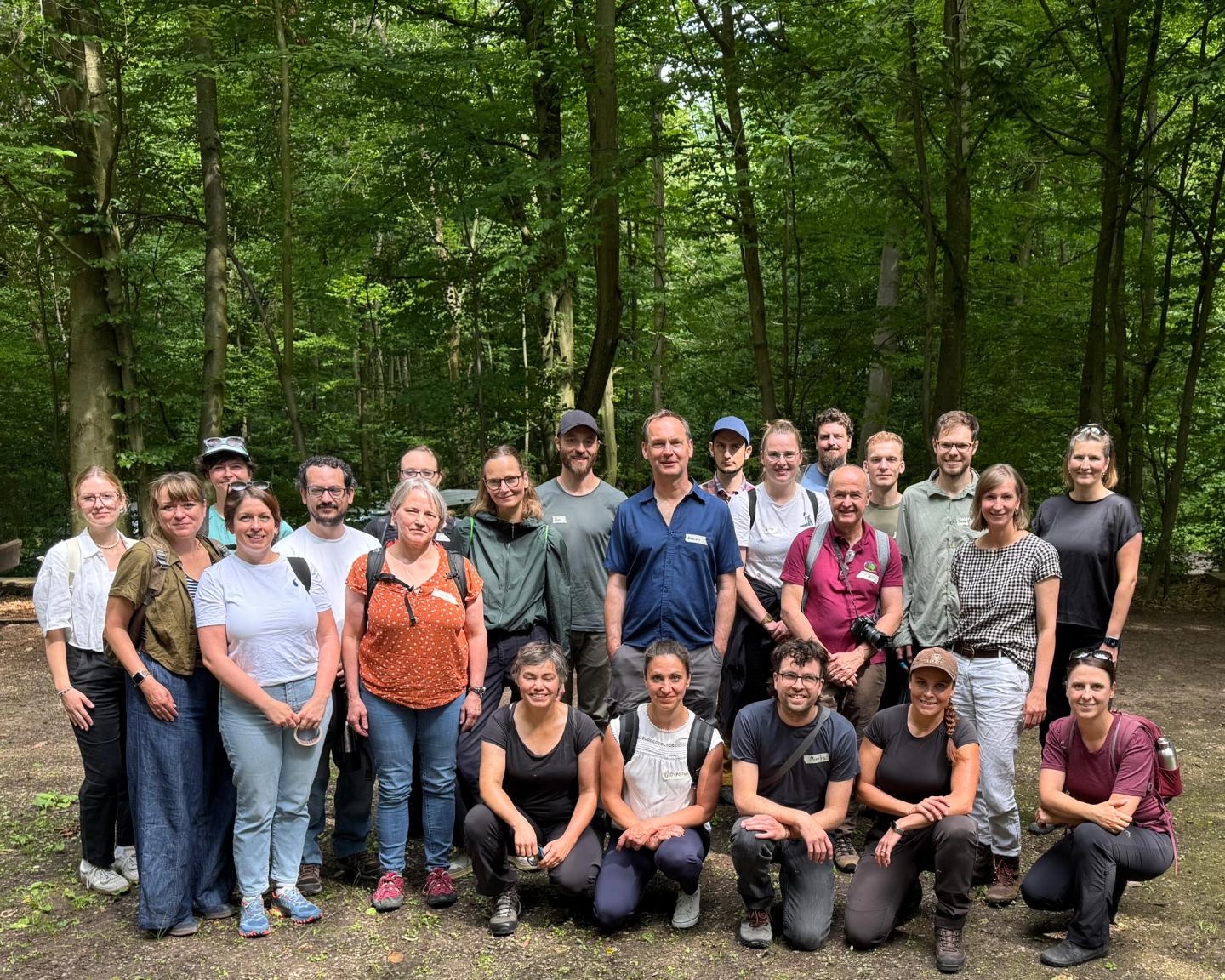
At the Göttingen train station, the DIVERSA team was already waiting for the more than 20 participants. Together, they walked a considerable distance through the countryside to the “Königsbuche” natural beech forest near the source of the Rhume River. This near-natural beech forest is one of the research sites of the DIVERSA Climate Future Lab and served as the venue for the coordination group meeting in late June.
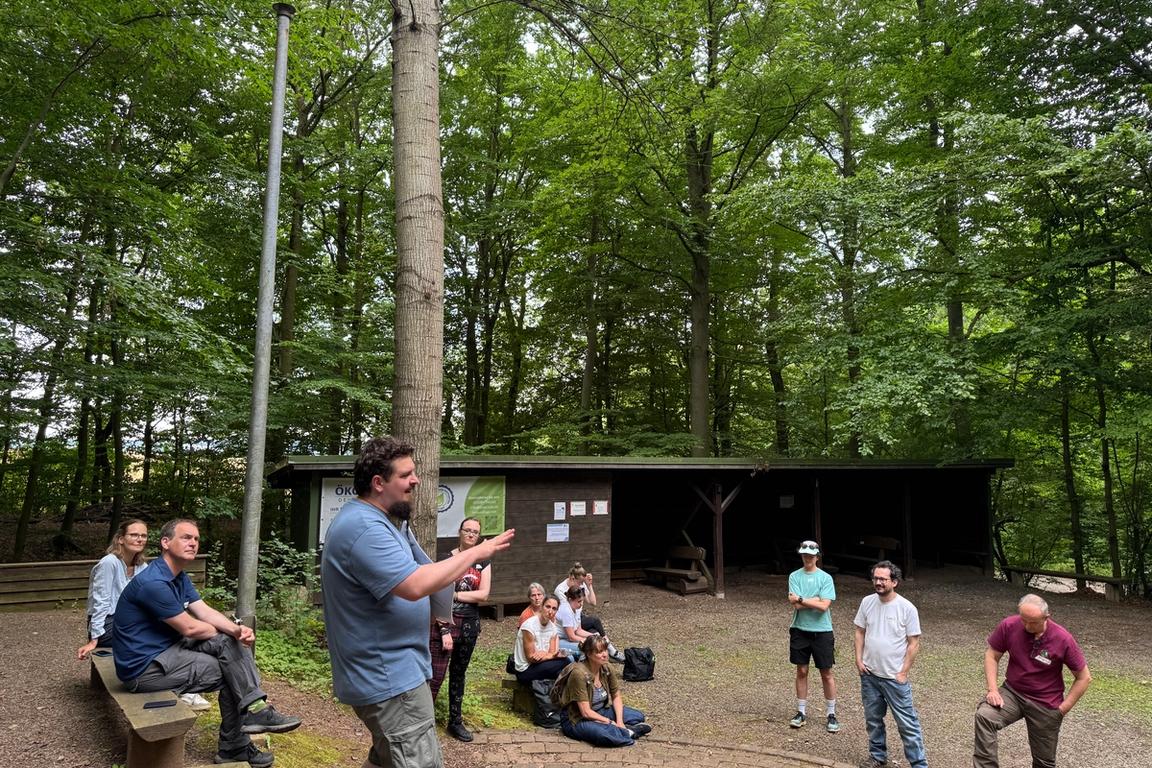
The coordinators of the Climate.Future Labs meet once a month—on the initiative of the ZKfN—via video conference to share updates and plan joint activities. In addition, each Climate.Future Lab invitesmembers of the network to visit its site once to present its own research in more detail. The host of the most recent meeting was DIVERSA, the Climate Future Lab that investigates how forests adapt to climate-change-induced disturbances and how their natural resilience can be strengthened. Also in attendance were representatives from the Lower Saxony Ministry of Science and Culture, the ZKfN office, and other staff members and interested parties from the Climate Future Labs. Dr. Sandra Peters, the coordinator of DIVERSA and organizer of the coordination group meeting, had put together a varied program with several project colleagues from DIVERSA. At several stations, the researchers presented their work, methods, and goals directly on the study site and answered participants’ questions. There were plenty of questions—after all, DIVERSA is all about the future of our forests. It is a topic with which almost everyone has a personal connection and that sparks interest on both a professional and personal level.
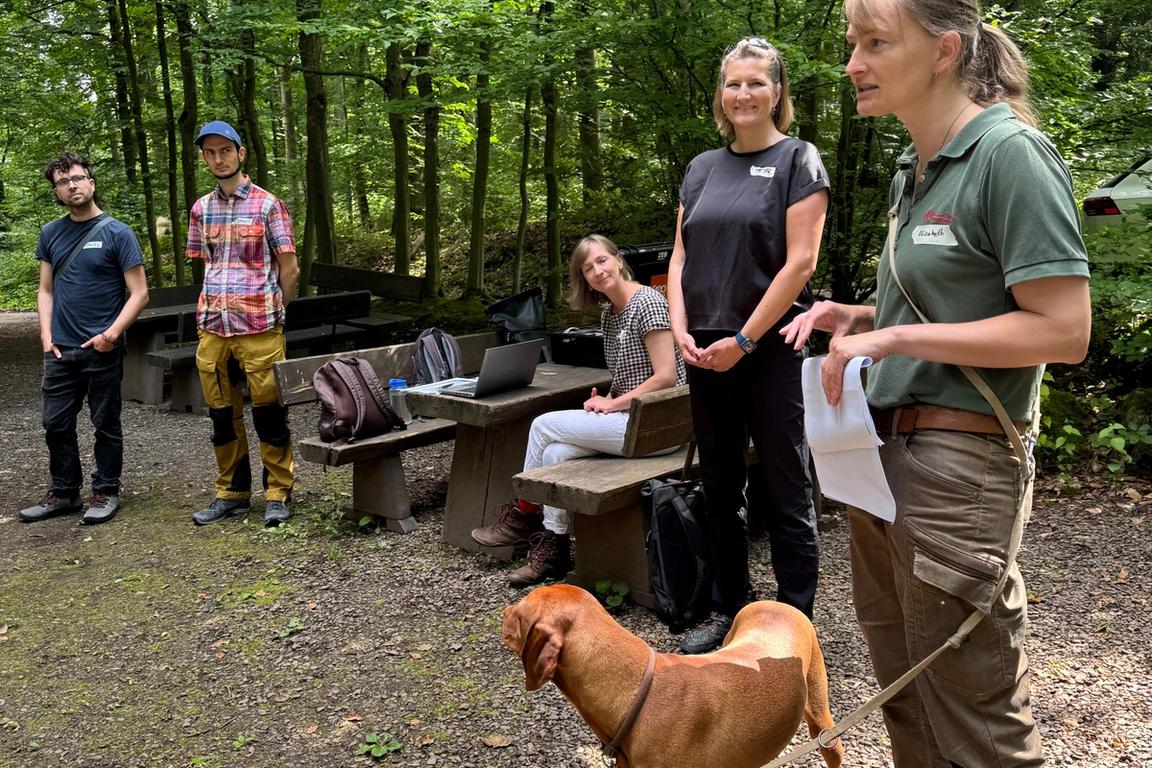
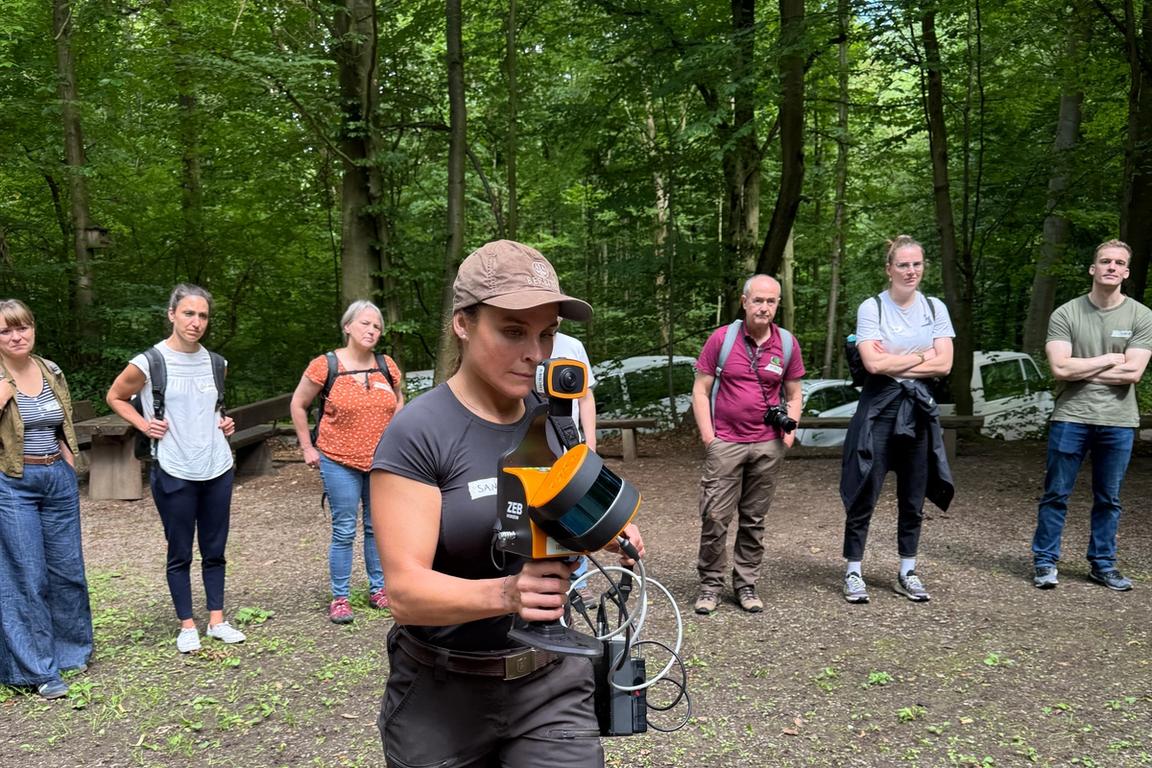
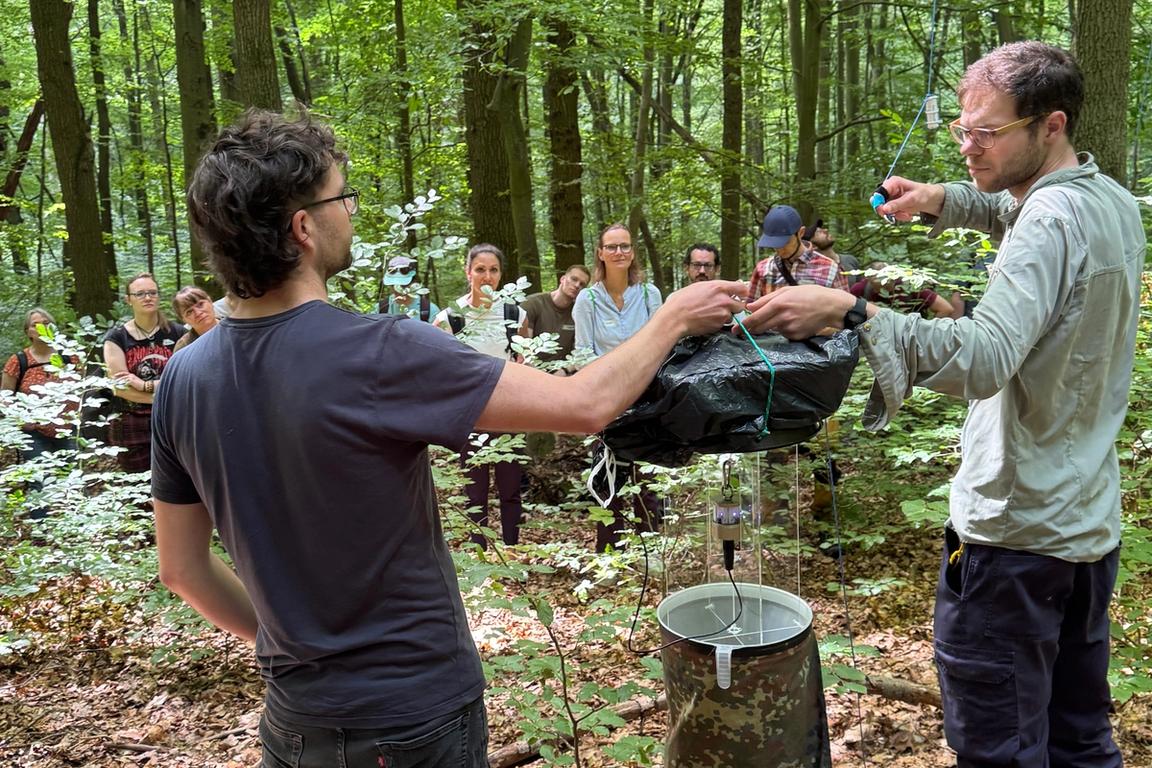
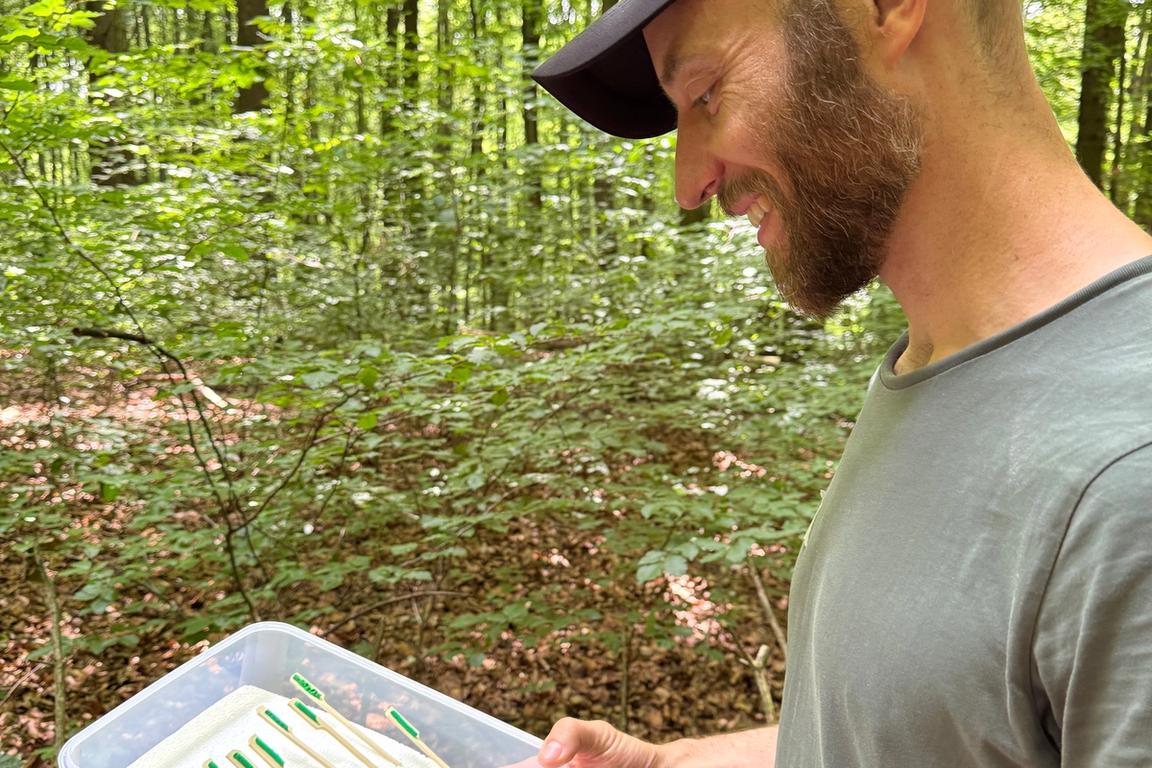
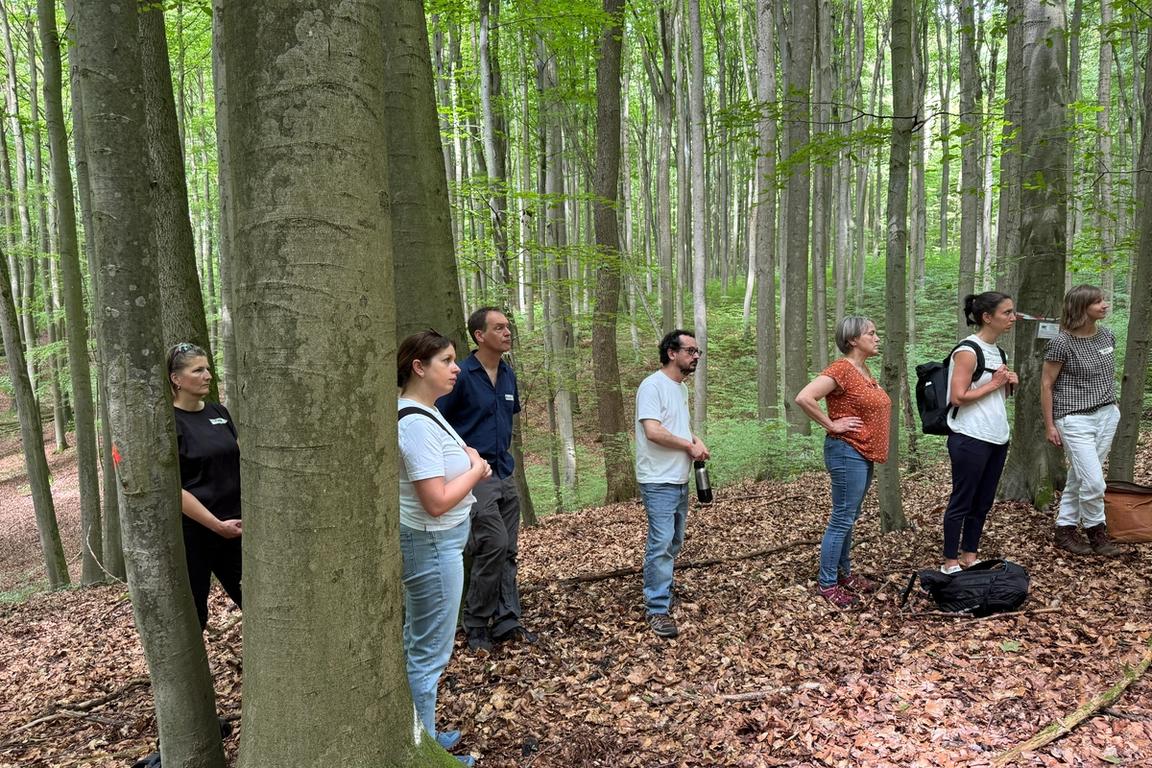
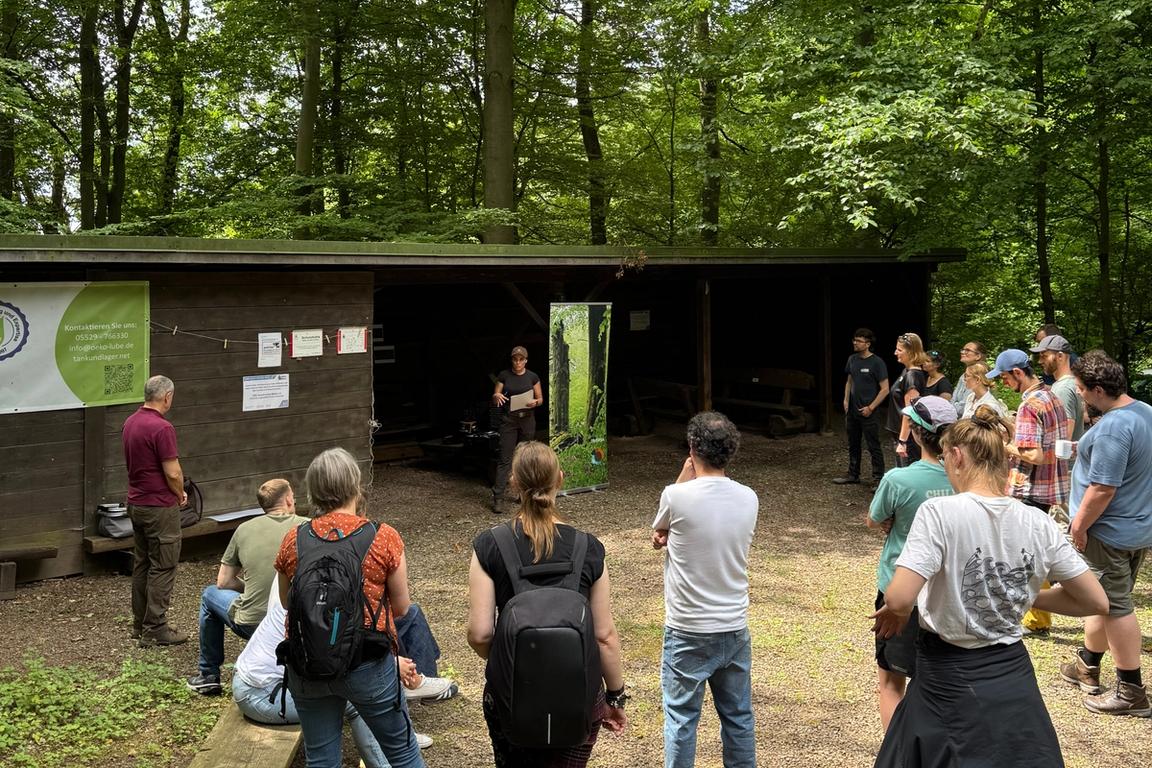
Dr. Elisabeth Over from the Lower Saxony State Forestry Department kicked off the event. She introduced the Rüderhausen forest district, where the DIVERSA study site is located, and shared interesting facts about forestry. Dr. Sandra Peters then demonstrated how to use a laser scanner. While the data was being processed in the background on a laptop, the group moved on to the next stop. In the understory of the natural forest, the group reached an old windthrow area of about 0.5 hectares that was created by a severe storm in 1997. Since then, researchers have been observing how the forest here has been developing without human intervention. Which tree species will prevail? Does biodiversity actually increase after such a disturbance? And what conclusions can be drawn from this for the forest of the future? It is precisely these kinds of long-term observations that provide answers to questions that often don’t arise until many years later. The research questions in forestry change much more rapidly than in other sectors. This poses a particular challenge for long-term research. That is why efforts are being made today to collect data that can also be used to answer the questions of the future, explained Dr. Peter Meyer, head of the Forest Conservation Department at the Northwest German Forest Research Institute. The next stops demonstrated just how diverse the methods used for this purpose are. There, Daniel Ochterbeck presented his light trap. Using two sampling locations—one high in the canopy and one at eye level—he studies moths, enabling him to identify differences between the habitats across the various study areas.
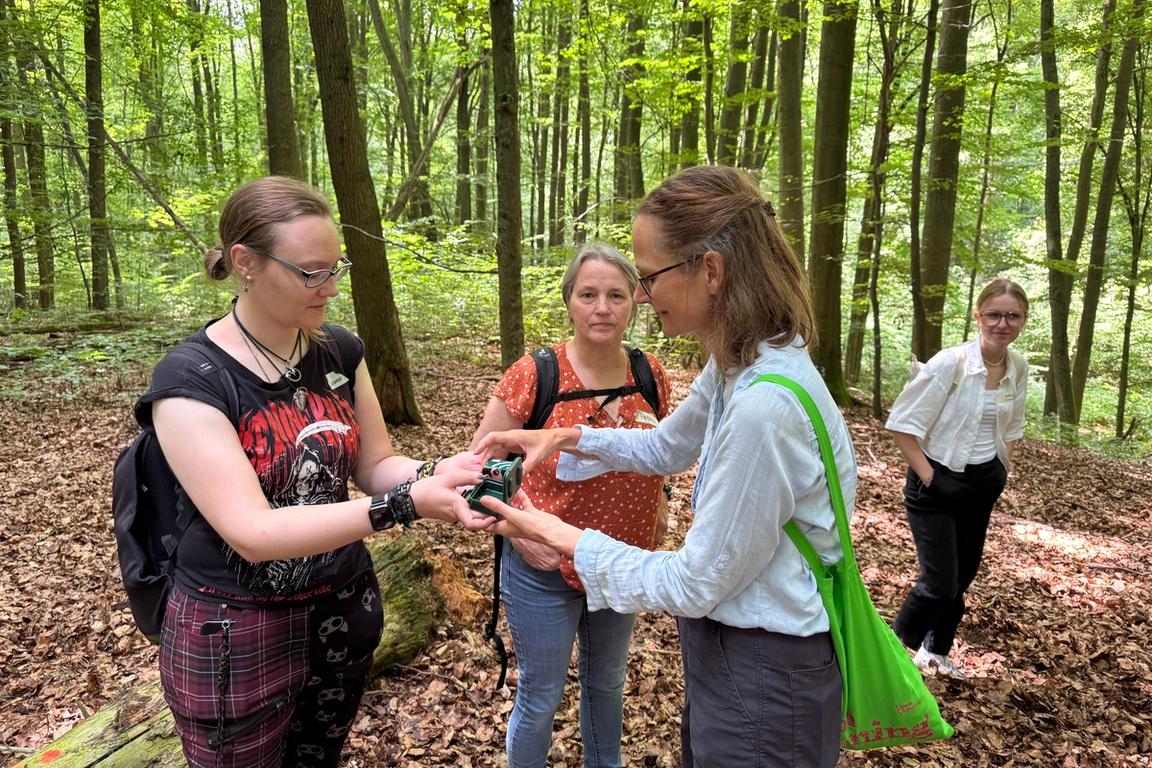
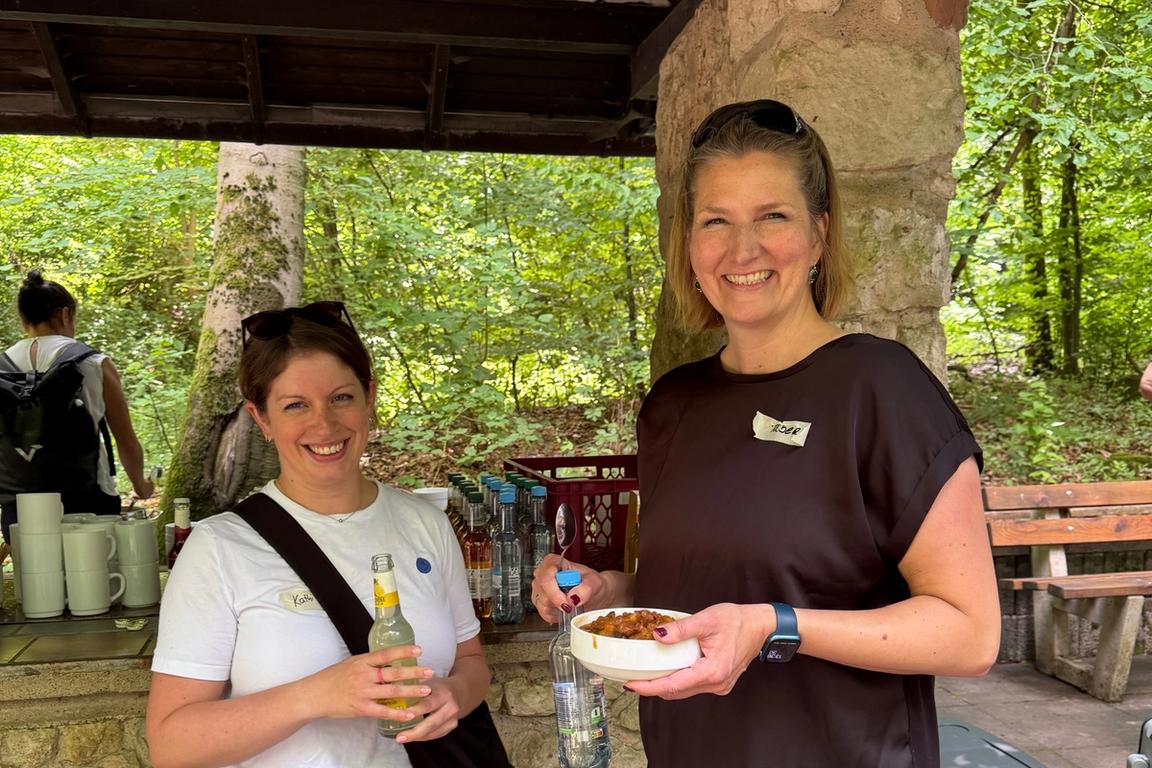
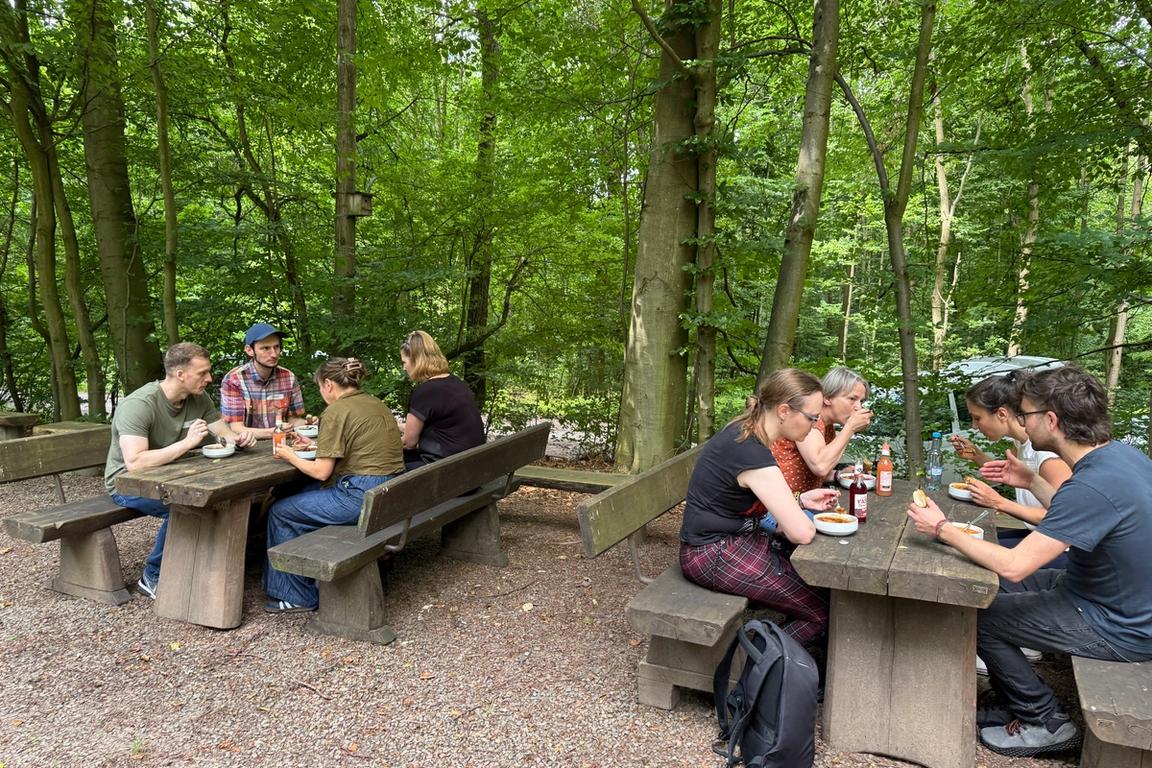
Moritz Baumeister then presented his audio recording devices, which he uses to automatically document the forest’s soundscape throughout the year. He is particularly interested in bird songs and the calls of bats, which are inaudible to humans. Using artificial intelligence, he analyzes the recordings to gain insights into biodiversity and how it changes over the course of the year. After so much research, the group enjoyed soup and coffee in the middle of the forest—and at least as many conversations as there had been earlier at the research stations. Once again, it became clear just how vibrant the exchange between the Climate Future Labs is. Researchers from DIVERSA and UMEX-HOPE spontaneously arranged a “bycatch exchange”: moths for mosquitoes.
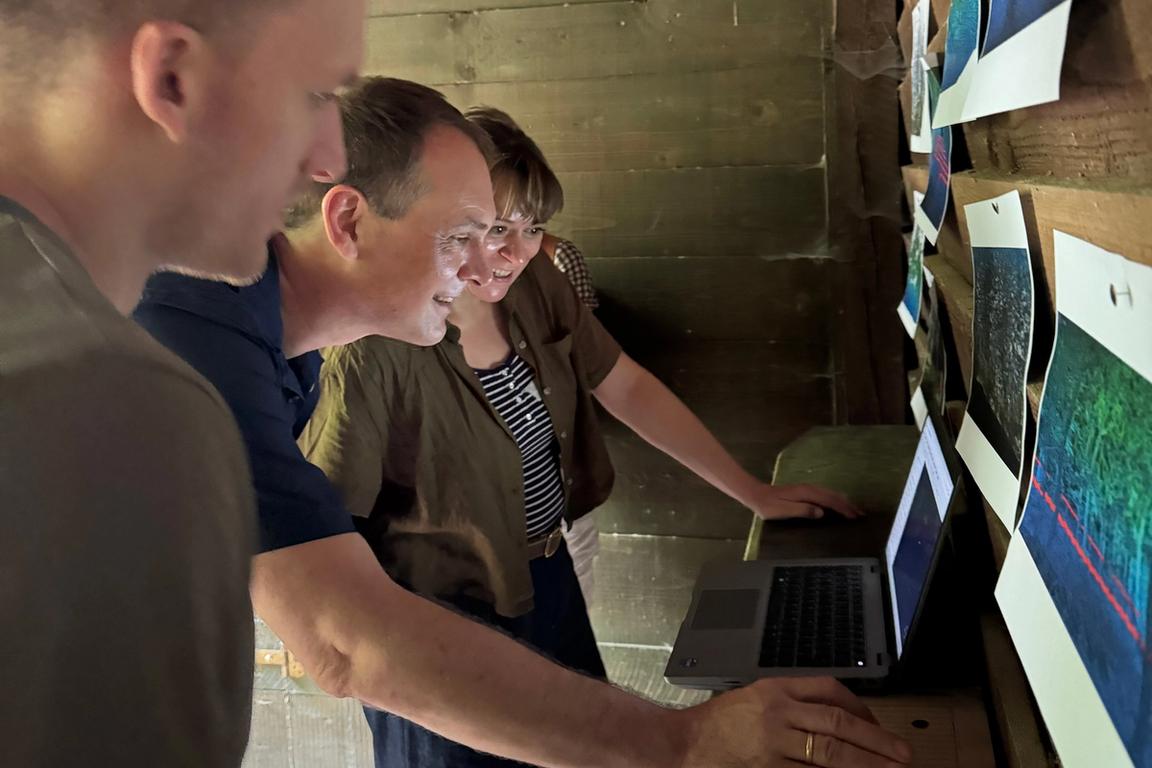
In the meantime, the laser scan data had also been processed. On the screen, participants could explore the forest they had been standing in just moments before as a three-dimensional point cloud. They eagerly zoomed in and rotated the view—even though the scanner is not actually designed to create pretty souvenir images. Rather, the data can be used to calculate how much biomass—and thus carbon—is stored in a forest stand. Luca Ehrminger concluded the session with his insights into modeling. This involves combining growth and risk models with different assumptions about forest management. This allows researchers to run through various scenarios and estimate how forests might develop under future climate conditions.
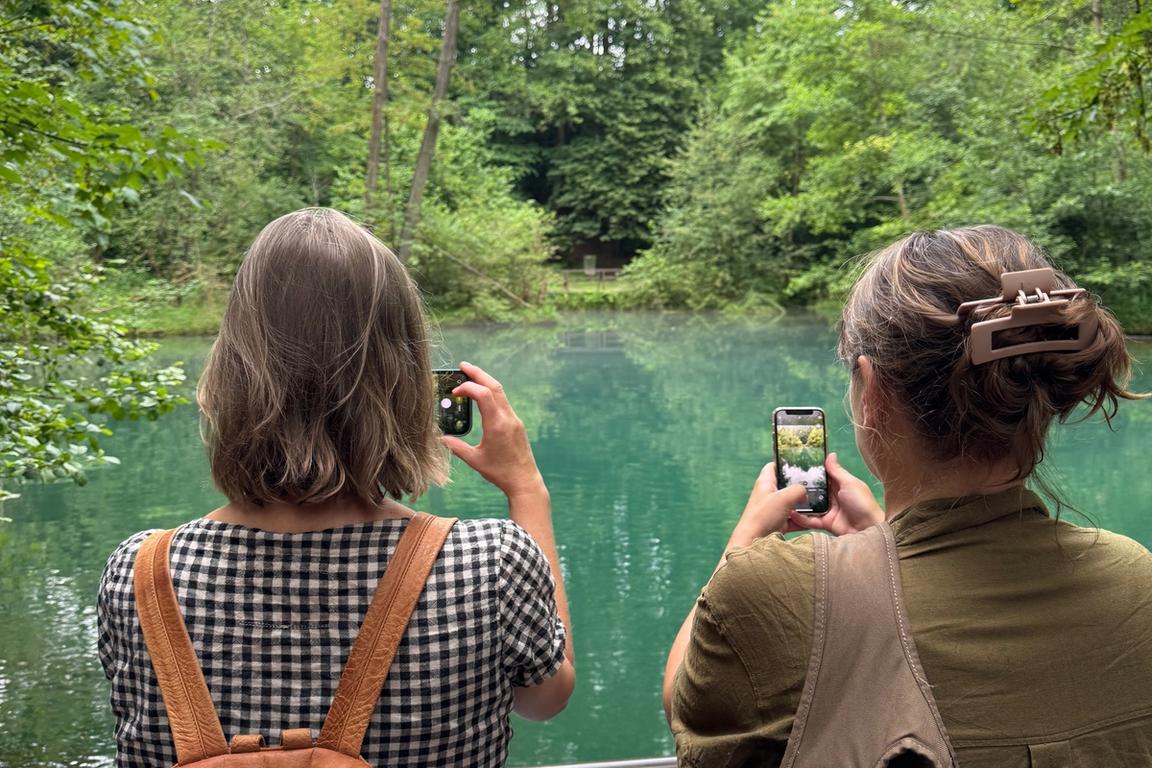
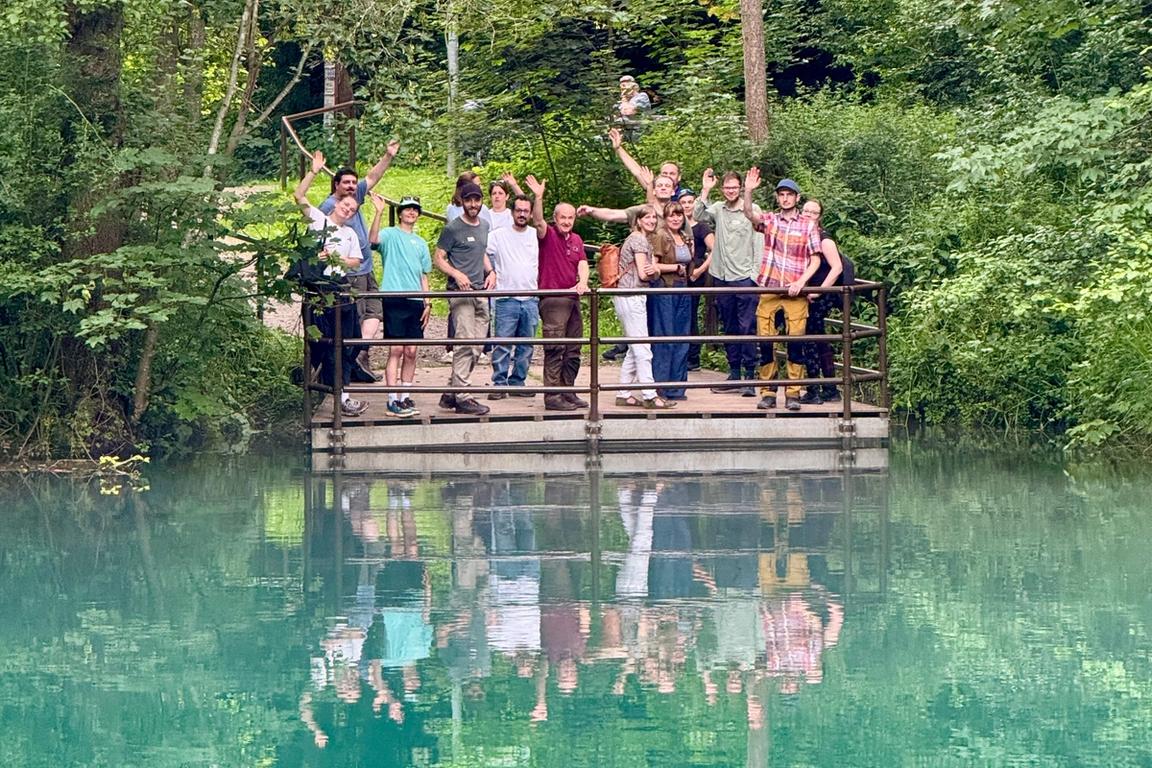
On the way back, the group made a brief stop at the source of the Rhume. Although it was not part of the official program the organizers could not pass up the chance to show the participants—most of whom weren’t from the area—this idyllic spot with its shimmering turquoise water. A day filled with measurement methods, research questions, and discussions not only provided many insights into forest research but also sparked new ideas for further collaboration within the network. Many thanks to the DIVERSA team for organizing the meeting and providing these fascinating insights.
Impressionen vom Tag













More Posts
All
Climate Research Through Dialogue: “Climate Future Lower Saxony” Symposium 2026
First results are becoming visible – and with them, the question of how they can unfold their impact together with practice.
2 min. Reading time
Climate-Resilient Agricultural Landscapes in Lower Saxony
The sixth Climate Future Lab, AgRe-Lab, combines biodiversity and climate research with regional practice
2 min. Reading time

OpenPlanning Zine 03 "Somethings Cooking"
The zine shows how cooking together and co-creative urban design are sparking new ideas for a mobile climate garden in Braunschweig.
2 min. Reading time